Friday, 22 May 2015

Evaluation of FMP

What happened?
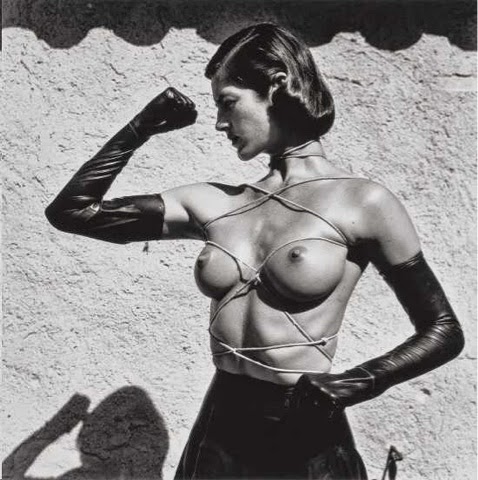
Over the past 11 weeks I have been working on this FMP exploring the idea that sex is used in fashion photography to sell the product. Ive chosen 10 photographers to draft initial responses and say what I think their work is trying to say. Two of which I have done more in depth research into, Terry Richardson and Helmut Newton. I then shot 4 test shoots and a final shoot. My first test shoot I shot in the style of Helmut Newton, then the others were purely experimental ideas of mine such as maybe using pin hole cameras or using ascetate to print a digital image onto photographic film paper. My final photographs were shot with inspiration from Terry Richardson.
What have I learnt in the past 11 weeks?
In the most recent weeks I have learnt a lot, in terms of research I have found out a lot about lots of different photographers. And I have taken a lot of inspiration from almost all these photographers. In terms of practical work I have learnt that some certain methods weren't as successful as others. The ascetate printing wasn't successful because when printing out of the printer it would always scratch the print as it came out. The pinhole cameras didn't work because the quality was so low because of how long the exposure had to be.
How is it useful to me?
In terms of research, it was useful to me because I learnt how, the photographers I have chosen to research, they work and what they use and I then could adopt the techniques that they use. For example, Helmut Newton would often use a medium format camera, on location. This is what I did for my first shoot, I borrowed a Bronica medium format camera from Amy, the technician, and went to a friends house and shot provocative photos of my friend. 
             In terms of practical work, I learnt to not use certain techniques because it was not suitable for the work i was hoping to do. For example, when using ascetate to print my images, not only would the printer scratch the ascetate as it came out, but some quality was lost through printing it and therefore had an effect on the final outcome.
How are the images similar to the photographers I have researched? 
I feel that in my first shoot, I have done quite well to replicate Newtons work. I used a medium format camera, on location, a lot like how Newton did his work. I also feel I have retained a similar level of elegance seen in my photography and his. I've done this by using black and white, because it is often asociated with elegance and glamour. I've also done this by being particular in what I made my models wear. The male model, I made wear a suit and tie for I felt it enforces that idea of a higher class. The female model, I made wear lingerie for the same reason. 
In my final images I used my knowledge of how Terry Richardson shoots his models to shoot mine. However I realised something about his work after I shot the images. That he often makes his models do something that is iconic to him. If I would have know this I would have made the model do something iconic to me.

Evaluation of Final Images

What happened?
I traveled to my friends house to do a shoot inspired by Terry Richardson. My initial idea was to shoot in the studio of the college to achieve a true white background in my photographs, however it was very difficult to book the studio at a mutual time for both me and my models. So I then decided to go to a friends house and use his white wall as a make shift studio. Due to not having the studio, I was limited in the equipment I could use. I didn't have any professional flashes, so I was forced to use the natural light coming from the window. I didn't have a light metre so I was forced to simply guess the exposure using trial and error. I ended up using a shutter speed of 1/60 and an aperture of f3.5. The extra equipment besides my camera was a tripod.
How I felt it went? 
I was quite disappointed with not being able to use the studio. This inconvenience is visible in my images. The lack of professional flashes caused the images to not really have and true whites in them. However despite the lighting I am overall happy with how the images came out, they have achieved the  level of controversy I was hoping for. When asking people what they thought of the work, not telling them it was mine, I got mixed opinions, some liking them and others discarding them as sexist.
What would I do next time?
Next time I would ensure I am able to book the studio for both me and my model. I feel I could also explore using different models and more than one model in one photograph. If on the off chance I am unable to book the studio I will ask to borrow a portable studio kit, like a flash and a light metre.


Thursday, 21 May 2015

Helmut Newton: Secondary research

'mixed reputation: as a serious photographer and a cynical pornographer.' This is a quote from the independent, it claims that there are two opinions with his photography. I found many articles claiming he's 'the worlds most inspirational fashion photographer' and other discarding his work as being 'perverted'. In my research I found that he almost always uses medium format, this gives you the same as using 35mm film, but retains the quality of a digital camera. He also often shoots on location as well as studio, this has an effect on the narrative of his images, the models are often in what looks like very elegant places which when used as commercial photography it is used to not only sell the cloths they are wearing but also used to sell the lifestyle these models live. 
                I then asked 'why do you think the use of black and white has been used?' To which most responses were that is was used to enforce the idea of elegance and glamour in the narrative of the photographs. This is because we often associate black and white with glamour, it is often used to sell lifestyle hence why it is used for a lot of high end brands.  


Helmut Newton: Primary research

Again, because I'm quite limited in what I can do as I'm a student, I again decided to create a survay and ask students and teachers what they thought of Newton's work. A common response was what I expected. That it seemed very based around male dominance and people often found it to be quite sexist. Even when I asked one of my tutors, he said he felt his work is representing male dominance, but when I then asked another tutor what they thought, he agreed with me in that there's a deeper meaning. That with deeper analysis you can find that it's actually the opposite. 
               I then asked people what they thought the purpose of his work is and where it would be used. That was quite inconsistant, some people felt his work would be used as magazine covers and others felt his work is more suited for exhibitions. His work was often used for both, so it's obviously quite clear what it is used for. 


Terry Richardson: Primary Research

Because I am quite limited in the primary research that I'm able to do, I decided to construct a survay, asking questions to people what they feel Richardson's work is all about, without giving them any information about him. This is so I can gather other initial responses about his work and see what the public thinks. I asked my friend, who considers herself a feminist, what she thought of his photography, to which she replied 'generic'. She thought that his work is basically like every other fashion photographer in that it features a celebrity or a very attractive person wearing very provocative clothing, using the idea of using sex to sell. What I can learn from this is that Richardson's work is very inspirational to other photographer who work in a similar way and to the industry for him to be 'generic'. I then asked one of my tutors what they thought of his work, to which she felt that he plays on people's weakness' in that the majority of his celebrity models are tabloid tragics, people that are often ridiculed by the public. I then asked a fellow student and they raised a point I didn't think of but agree with, through the way he gets his models to pose doing something iconic to him, such as the thumbs up or the glasses, he might be obsessed with his own identity, or it could be a tag or a mark to let people know that it is his work.
              I then asked people what the purpose of his photography is to which most people replied it would be a front cover for a magazine maybe vogue or another high end magazine. Some people thought because some of the clear branding in his work, featuring brands such as Supreme, it could be for advertising and commercial work.


Tuesday, 19 May 2015

Secondary Research: Terry Richardson

One of the first things I saw after typing in 'Terry Richardson' was an article titled 'Is Terry Richardson an artist or a predator?'. This enforces my idea that his work is subject to be taken in the wrong way and to be discarded as the work of a perverted man. After looking deeper into his work and his personal work, I found that his personal work is a lot more graphic than his commercial work, often featuring himself naked and erect, that many find pornographic and misogynistic, and which can make viewers feel very uncomfortable. He has been called 'the worlds most fucked up fashion photographer' by the website jezebel, 'fashion's shameful secret' by the guardian and 'Americans next top scumbag' by wonkette. I personally disagree with these opinions, I feel it's narrow minded to ridicule his work because it makes some people feel uncomfortable.
                 Richardson has a very distinctive and recognisable method. Shooting his models head on, with a bright flash against a white wall. He excels something increasingly rare in fashion photography, what the designer of Tom Fords calls 'capturing a very real moment'. Richardson's own fame is due, partly, to his habit of including himself in shots of celebrities and partly to his formal consistency. I noticed that most people who are photographed alongside him adopt some aspect of his signature look, such as his glasses or thumbs up gesture.


Monday, 18 May 2015

David Hockney primary research

David Hockney Primary Research

To do this type of research I am limited in what I can do. What I decided to do was draft a short survey, in which I would ask people what they thought about Hockney's work. Something I found with his work, when asking friends, is that most people are familiar with Hockney himself, but wasn't very familiar with his work. I asked 'what are your views on Hockney's work?' And I'd often be forced to show them his work because they didn't know his work but knew him. A commen response was simular to mine, in that they didn't quite understand the point of distorting the model. One person raised the point that he is trying to incorporate the idea of three dimensions in a medium that mainly consists of two dimensional work. This person also recognised that Hockney is clearly using Picaso for his inspiration